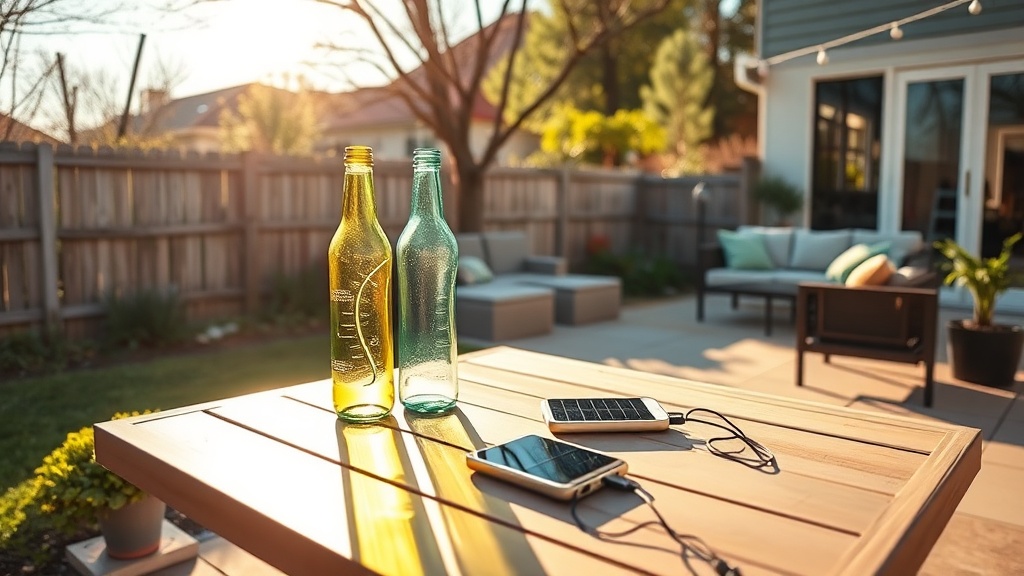
Earth Day DIY: Solar-Powered Outdoor Upgrades for a Spring-Ready Backyard

Ever wondered if you could power your patio without a single wall outlet? On Earth Day 2026, I’m handing you a toolbox of solar hacks that turn sunlight into instant, low‑maintenance glow for your spring oasis.
Why does this matter? Because every extra watt of clean energy you capture is a direct strike against the noise of the climate‑crisis feed. As a former VC analyst turned “signal filter,” I treat your time like a non‑renewable resource — so let’s make sure every minute you spend on this project pays back in light, charge, and peace of mind.
What simple solar projects can I build this weekend?
How do I make a DIY solar garden light from a recycled bottle?
Materials (under $10 total):
- 2‑liter clear PET bottle (cleaned and trimmed)
- Small 5‑V solar panel (found on Amazon or a local hardware store)
- LED strip or 5‑V waterproof LED bulb
- Mini USB power bank (re‑purposed from an old phone charger)
- Silicone sealant, zip ties, and a drill with a ½‑inch bit
Step‑by‑step:
- Cut the bottle in half. The bottom becomes the lantern housing; the top becomes a protective dome.
- Drill a small opening near the base. Thread the LED strip through, leaving the connector exposed.
- Mount the solar panel. Glue it to the inside of the dome so it faces upward when the lantern sits on the ground.
- Wire the LED to the power bank. Use the USB cable from the old charger, splice the positive/negative leads, and secure with zip ties.
- Seal everything. Apply silicone around the cut edge and the LED entry point to keep moisture out.
- Position for maximum sun. Place the lantern where it catches at least 4‑5 hours of direct sunlight each day (south‑facing patio corners work best).
Result: a glowing, self‑charging beacon that lasts through the night on a single afternoon of sun. Pro tip: Add a reflective aluminum foil strip inside the dome to bounce stray light onto the panel — your garden will thank you.
How can I build a solar phone charger from reclaimed aluminum?
Materials (≈ $12):
- Reclaimed aluminum sheet (e.g., from an old window frame)
- Mini 6‑V solar panel (10‑Watt, cheap on e‑bay)
- USB boost converter module (5 V/2 A)
- Soldering iron, wire, and heat‑shrink tubing
- Silicone gasket for weather sealing
Assembly:
- Cut the aluminum into a 6‑inch square. This becomes the chassis; sand the edges for safety.
- Mount the solar panel on one side. Use small rivets or silicone to secure it.
- Solder the panel leads to the boost converter. The converter steps the raw voltage down to a stable 5 V USB output.
- Seal the back with a silicone gasket. This protects the electronics from rain while still allowing airflow.
- Test with a phone. Place the charger in direct sun for 30 minutes; you should see a charging icon appear.
Result: a sleek, metal‑boxed charger that can juice a smartphone, earbuds, or a Bluetooth speaker while you sip a cold brew on the patio.
What about a solar‑powered water feature for ambience?
Even a modest fountain can become a statement piece when it runs on sun power. The trick is to use a low‑flow pump (under 30 W) and a small 12‑V solar panel. Mount the panel on a nearby wall or on a custom‑built wooden frame, and run the wiring through a waterproof conduit. The pump cycles on when the panel generates enough voltage — no batteries, no wiring to the house.
How do I maximize sunlight in spring for these projects?
When is the optimal placement for solar panels in the Northern Hemisphere?
During April, the sun rises roughly 30° higher than in winter. Aim your panels at a 45° tilt facing true south. If you can’t tilt a fixed panel, position it on a raised stand that catches the low‑angle morning sun and the higher‑angle afternoon sun. A quick Energy .gov guide provides a handy calculator for angle adjustments based on latitude.
What landscaping tricks keep panels clean and efficient?
Dust and pollen are the silent killers of solar output. Plant low‑maintenance groundcovers like creeping thyme or sedum around the base of your panels; they suppress weeds without shading the surface. A light rinse with a garden hose every two weeks (or a quick wipe with a damp cloth) restores efficiency — think of it as a “signal filter” for your panels.
Can I combine these DIY solar pieces with existing outdoor décor?
Absolutely. The recycled‑bottle lanterns double as decorative planters — just add a small succulent in the bottom half. The aluminum charger can be mounted on a side table that already holds your coffee mug. And the solar fountain can replace a traditional electric one, turning the sound of water into a low‑tech, low‑energy soundtrack.
How do these projects fit into a broader Earth‑Day sustainability plan?
What is the carbon‑offset impact of a small solar garden light?
Assuming a 5‑W LED runs 8 hours per night, that’s 40 Wh per day, or 0.04 kWh. Over a year, that’s 14.6 kWh. The average U.S. grid emits about 0.45 kg CO₂ per kWh, so each lantern avoids roughly 6.5 kg of CO₂ annually — equivalent to planting about 0.3 mature trees.
How can I track the performance of my DIY solar setup?
Use a cheap USB‑powered watt‑meter (available for $5‑$10) between the solar panel and the boost converter. Log daily output in a spreadsheet; you’ll quickly see the sweet spot for sun exposure and can tweak placement. It’s a low‑tech version of the “signal‑to‑noise” ratio I always apply to data — only now you’re measuring literal light.
What’s the next step after Earth Day?
Take the momentum and scale up. Consider adding a solar‑powered security light with motion detection, or a small solar battery bank to keep your patio lit after dusk on cloudy days. The same principles apply: reclaimed materials, simple wiring, and a relentless focus on utility over hype.
Takeaway
Earth Day isn’t just a calendar reminder; it’s a call to action. By building these three DIY solar projects — garden lanterns, a phone charger, and a water feature—you turn sunlight into usable power, cut down on grid reliance, and give your spring backyard a sleek, sustainable edge. Grab a bottle, a piece of aluminum, and a little sunlight, and let the signal‑filtering begin.
Related Reading
- Pollinator‑Friendly Patio Design: A Spring Guide for Eco‑Conscious Entertaining — How to choose native plants that complement your solar garden lights.
- Spring Allergy Relief: Natural Remedies and Home Adjustments — Keep your outdoor space comfortable for guests with allergy‑friendly landscaping.
- Spring Home Refresh: Upcycle Furniture with Non‑Toxic Paint — Pair reclaimed‑wood furniture with your solar projects for a cohesive look.
- Eco‑Conscious Easter: Sustainable Decor, Menu, and Activities — Extend the seasonal sustainability mindset beyond Earth Day.
FAQs
What voltage should I use for a DIY solar garden light? A 5‑V panel matches most waterproof LED strips and eliminates the need for a voltage regulator.
Can I use a regular AA battery instead of a power bank? Yes, but a rechargeable power bank offers higher capacity and fewer waste batteries.
Do these projects require any permits? For small, off‑grid installations (under 50 W), most municipalities don’t require permits. Always double‑check local codes if you’re installing a larger solar array.