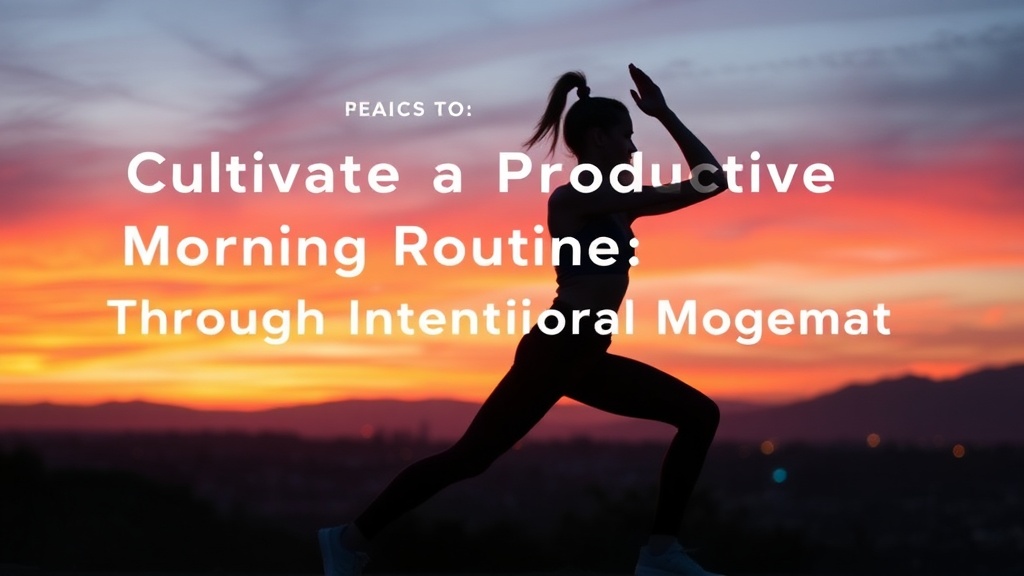
Cultivate a Productive Morning Routine Through Intentional Movement

The condensation on a cold glass of water, the silence of a room before the first notification pings, and the rhythmic weight of a single way of moving. Most people treat the first hour of the day as a race to catch up with the world. They don't. This post examines how to replace reactive digital consumption with intentional physical movement to stabilize your cognitive load before the workday begins.
The goal isn't to become a fitness influencer or to spend two hours in a high-intensity interval training class. It’s about biological signaling. You are using movement to tell your nervous system that the day has begun, moving from a state of sleep inertia to one of focused readiness. We're looking at the intersection of physical agency and mental clarity.
Why Should Movement Be Part of a Morning Routine?
Movement acts as a physiological trigger that clears adenosine—the chemical responsible for that heavy, groggy feeling—from your system. When you sit still immediately after waking, your body stays in a low-power mode. By incorporating low-impact, intentional movement, you transition from sleep to alertness without the cortisol spike associated with caffeine-only starts.
Think of it as a warm-up for your brain. If you jump straight into a complex spreadsheet or a high-stakes meeting, you're essentially asking a cold engine to hit 80 mph instantly. A few minutes of mobility work or a brisk walk acts as the oil change your cognitive functions require.
Research from the National Institutes of Health suggests that even short bursts of physical activity can improve cognitive function and mood. It isn't about burning calories; it's about blood flow and neurological alertness.
The Three Pillars of Intentional Movement
To build a routine that actually sticks, you need to categorize your movement based on the time you have available. Most people fail because they try to do too much too soon. Start small.
- Mobility & Flow: Low-intensity movements like Yin Yoga or simple stretching. This is for days when your body feels heavy or you have a tight schedule.
- Steady-State Aerobics: A brisk walk or a light jog. This is for days when you need to clear your head and process complex thoughts.
- Strength & Resistance: Short, high-tension movements like bodyweight squats or pushups. This is for days when you need to feel grounded and powerful.
What Is the Best Type of Movement for Mental Clarity?
The best movement for mental clarity is the one that requires enough focus to pull you out of your phone but not so much effort that it exhausts you before noon. For most, this means "Zone 2" activity—movement where you can still hold a conversation without gasping for air.
If you're looking for a tool to facilitate this, skip the complicated gym equipment. A simple high-quality yoga mat from a brand like Lululemon or a set of resistance bands is more than enough. The friction of a high-end mat under your hands provides a sensory cue that this time is dedicated to your physical presence, not your digital presence.
Consider the following comparison of morning movement styles to see where you fit today:
| Movement Type | Primary Benefit | Time Required | Mental State |
|---|---|---|---|
| Yoga/Stretching | Nervous System Regulation | 5–15 Minutes | Calm & Centered |
| Brisk Walking | Cognitive Reset | 20–30 Minutes | Observant & Fluid |
| Bodyweight Training | Physical Grounding | 10–20 Minutes | Alert & Focused |
I've found that a walk is often more effective than a heavy lifting session for creative problem-solving. There's a reason many great thinkers preferred a stroll. It allows the "default mode network" of the brain to engage, which is where your best ideas actually live.
How Do I Build a Sustainable Morning Routine?
Sustainability comes from removing friction. If you have to hunt for your leggings or clear a space in your living room every morning, you won't do it. You need to set the stage the night before.
I often tell people to treat their morning movement like a ritual, much like how one might approach daily writing with a fountain pen. It’s about the tactile experience. The weight of the pen, the texture of the paper—these things matter. Similarly, the weight of your movement matters. It’s not a chore; it’s a sensory engagement with your own body.
Try these three steps to ensure you actually follow through:
- The 10-Minute Rule: Commit to just ten minutes. If you want to stop after ten, you can. Usually, once the blood is moving, you'll want to continue.
- Visual Cues: Leave your yoga mat unrolled or your walking shoes by the door. If you see it, you're more likely to engage with it.
- No-Phone Zone: Do not check your email or social media until the movement is complete. Once you enter the digital stream, your "intentional" state is gone. You're just reacting again.
A common mistake is thinking you need a "perfect" routine. You don't. You just need a consistent one. Some mornings you'll feel like a powerhouse and want to run five miles; other mornings you'll barely be able to touch your toes. Both are valid. The goal is the act of moving, not the intensity of the workout.
If you find yourself struggling with the transition from sleep to movement, try pairing it with a sensory ritual. I personally find that a slow, deliberate pour of hot water over tea leaves helps signal the transition. If you're interested in how to refine these small moments, you might enjoy learning how to build a high-quality tea ritual at home. It's a great way to ground yourself before the movement begins.
The world will try to grab your attention the moment you open your eyes. It's a relentless, noisy tug-of-war. By claiming those first few minutes for your body, you aren't just "exercising." You are setting a boundary. You are deciding that your physical presence takes precedence over the digital noise. That is where true productivity begins.
Steps
- 1
Prepare Your Space the Night Before
- 2
Start with Gentle Breathwork
- 3
Incorporate Low-Impact Stretching
- 4
Listen to Your Body's Needs