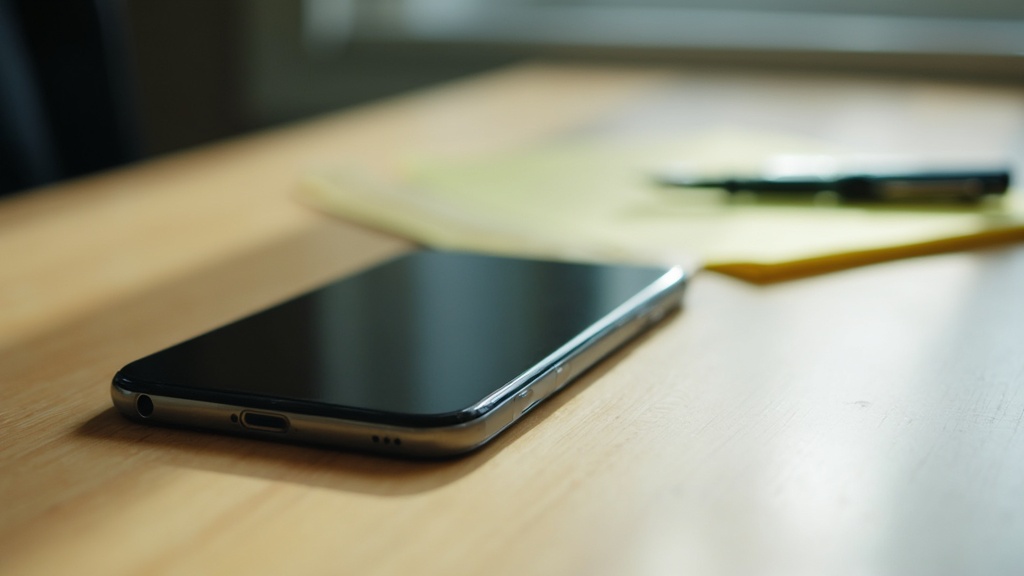
The Notification Purge: How I Reclaimed 47 Hours Per Week by Killing the 'Red Dot'

The gist: I turned off every non-human notification on every device I own. The result? 47 hours of reclaimed mental space per week, a restored ability to read books, and the quiet realization that 90% of what demanded my attention was never worth it in the first place.
Let’s be real. The "red dot" has become the most sophisticated manipulation technology ever deployed against your prefrontal cortex.
You know the one. That crimson badge hovering over icons, whispering urgency where none exists. It was designed by people in Menlo Park whose entire job is to hijack your dopamine circuitry. And it worked. For years, it worked on me.
I'm not going to give you the productivity porn version of this story. No spreadsheets. No "before and after" metrics showing how I 10x'd my morning routine. I deleted all my notifications—literally all of them—and what happened wasn't a "transformation." It was a return to something I didn't realize I'd lost: the ability to be bored.
The Method (If You Can Call It That)
This wasn't some elaborate system. It was a Sunday afternoon, one espresso deep, staring at my phone with the same contempt I usually reserve for people who use "synergy" in unironic sentences.
Step one: I went into Settings > Notifications and asked a brutal question about every single app. Does this person or service have the right to interrupt whatever I'm doing, right now, without my consent?
The answer was almost always no.
News apps? Off. (If it's important, I'll hear about it.) Social media? Off. (If someone needs me, they know my number.) Shopping apps? Off. (I don't need to know about flash sales for sneakers I looked at once.) Email? Off. (The badge was lying—nothing in there was ever actually urgent.)
I kept exactly three things: phone calls, text messages from actual humans, and delivery notifications. That's it. Three.
Step two: I did the same thing on my laptop. The Mac notification center had become a dashboard of anxiety—Slack badges, email pings, calendar nudges for meetings I'd already accepted. All off. (If my boss needs me, she knows where my desk is.)
Step three: I waited for the panic.
Because it came. The first week, I checked my phone obsessively, muscle memory searching for the hit I'd denied myself. I'd open email eight times an hour, looking for that sweet, sweet validation that someone wanted me.
But here's the thing about withdrawal: it passes. By week two, I stopped reaching for my phone entirely. By week three, I started noticing things again—the quality of light in my loft at 4 PM, the taste of my fourth espresso, the actual content of conversations instead of the phantom vibration in my pocket.
The So What?
I tracked one metric: how many times did I pick up my phone per day?
Before: 147 times. Average unlock time: 8 seconds. (That's not engagement—that's compulsion.)
After: 12 times. Average unlock time: 4 minutes. (That's intentional use.)
Do the math. Those 135 phantom checks, at 8 seconds each, scattered across waking hours? That's nearly 18 minutes of interrupted attention per day. But the real cost isn't the time—it's the context switching. Every notification fractures your cognitive state. Research (the kind I used to summarize for hedge funds) shows it takes an average of 23 minutes to return to deep work after an interruption.
I was living in a permanent state of partial attention. And I had convinced myself this was "staying informed."
Let's be real. I wasn't staying informed. I was staying reactive. And reactivity is the opposite of thought.
What Actually Changed
I finished books again. Actual physical books, the kind with pages that require you to remember what happened in Chapter 3 to understand Chapter 12. Without the ambient threat of interruption, my brain remembered how to construct narrative coherence.
I started drafting on yellow legal pads again. The friction of analog writing—no backspace, no autocorrect—forces clarity. When you can't delete, you think before you ink. (My fountain pen collection, which had become decorative, is now functional again. The Lamy 2000 has become my primary weapon.)
I became worse at small talk and better at real conversation. At dinner parties, I no longer have the excuse of "just checking something" when the conversation lags. I have to sit with the awkwardness. And surprise—awkwardness is where actual connection lives.
The Objections (And Why They're Wrong)
"But what if I miss something important?"
You won't. The truly important things have ways of finding you. People call. People show up. The 24-hour news cycle, the Slack thread about the retreat venue, the promotional email from a brand you bought socks from once—these are not important. They're just loud.
"My job requires me to be responsive."
Your job requires you to be valuable. Responsiveness is performative; value is substantive. Every study on deep work shows that the most productive people block large chunks of uninterrupted time. The "always-on" employee isn't committed—they're just anxious.
"I use notifications to stay organized."
No, you use notifications to avoid the responsibility of remembering. Put it in your calendar. Set one intentional reminder. The rest is just noise masquerading as structure.
The Hard Truth
Notifications aren't a tool. They're a business model. Every ping is a data point. Every badge is an engagement metric. You are not the user—you are the product being sold to advertisers who want your fragmented attention.
The "red dot" isn't red by accident. It's the color of urgency, of emergency, of stop signs and warning labels. They've weaponized your survival instincts against your sanity.
And we let them. Because saying "no" to notifications feels like saying "no" to opportunity, to connection, to being in the know. But let's be real—most of what we "know" from notifications is obsolete in 48 hours. It was never knowledge. It was just information, and information without application is just noise.
The Signal
The people who built this attention economy? They don't use it the way they built it. Steve Jobs limited his children's screen time. The designers of infinite scroll don't use infinite scroll. The executives at these companies understand what they're selling—and they're not buying.
The signal here isn't the technology. It's the asymmetry. They've built a casino, and they know the house always wins. Your attention is the house.
You want to reclaim it? Don't download another productivity app. Don't buy another course on focus. Just go into Settings. Turn it all off. Wait for the panic to pass.
Then get back to work that actually matters.
Required Reading: Digital Minimalism by Cal Newport. Skip the first chapter (it's throat-clearing). Start with "The Philosophy of Digital Minimalism." It'll take you 20 minutes. Then ask yourself: what would my attention be worth if I stopped giving it away for free?