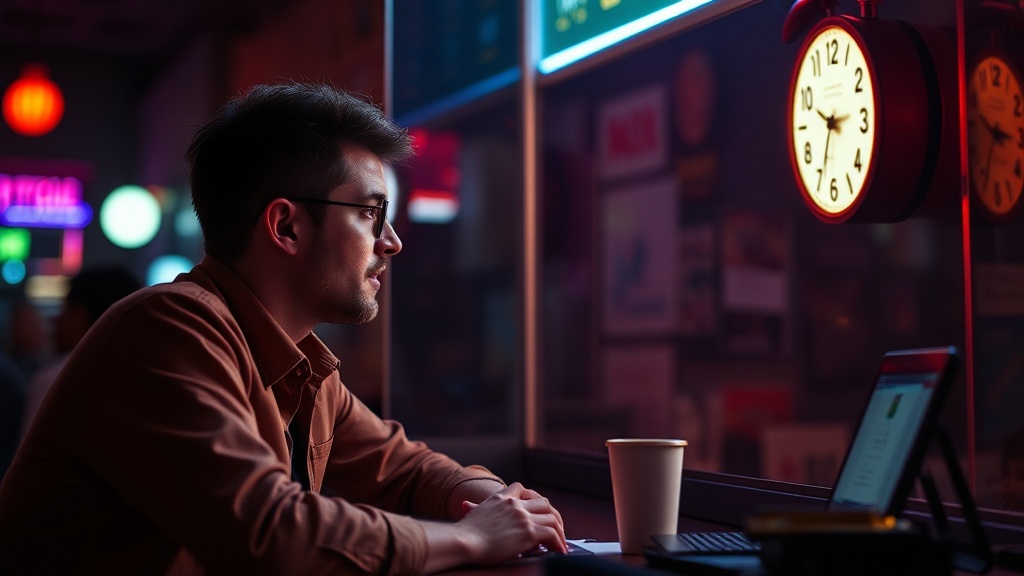
The Lost Art of Having a Hot Take: Why Algorithmic Culture Makes Us Boring
Americans now spend an average of seven hours daily on screens, with nearly 40% of that time governed by algorithmic recommendations. That's almost three hours a day where an invisible curator decides what culture you encounter, what opinions you see, and—gradually—what you believe you actually like. We're not consuming culture anymore; we're being fed it through a tube optimized for engagement, and the result is a generation of people who think they have taste but actually have habits.
This isn't another tired rant about "phone bad." The algorithm isn't some villainous force—it's a mirror that shows you what you already clicked, then shows you more of it until your entire cultural diet consists of variations on a theme. The problem isn't the technology; it's what happens to your identity when your taste stops being something you develop and becomes something that's administered to you.
Why Do Algorithms Make Our Taste So Predictable?
Netflix knows what you want to watch before you do. Spotify can generate a playlist that feels personally curated when it's actually just pattern-matching against millions of similar users. These systems work by identifying what statistically similar people enjoyed and feeding you the same cultural calories. It's efficient, sure—but efficiency is the enemy of discovery.
Real taste development requires friction. You stumble into a dive bar and hear a band you've never heard of. A friend drags you to an art show you don't understand. You read a book because the cover caught your eye, not because it appeared in a "Because you liked..." carousel. These moments of serendipity—uncomfortable, confusing, occasionally disappointing—are where identity actually forms. When an algorithm removes the possibility of not liking something, it also removes the possibility of being surprised by what you love.
The flattening effect is measurable. A 2021 study published in Nature found that algorithmic recommendation systems create "filter bubbles" that reduce cultural diversity by up to 60% compared to organic discovery methods. Your Netflix queue isn't expanding your horizons—it's reinforcing a persona you accidentally created in 2019 when you binge-watched three similar shows during a stressful week.
Can You Actually Have a Unique Opinion Anymore?
Here's where it gets uncomfortable: when everyone's consuming the same algorithmically-approved culture, originality of thought becomes nearly impossible. You didn't just watch The Bear—you watched it, saw the TikToks about it, read the Twitter threads explaining what it "really means," and absorbed the consensus opinion before you even formed your own. By the time you tell your friend it was "an exploration of toxic masculinity and found family," you're not expressing a thought—you're reciting homework.
This creates a strange cultural pressure where having an unpopular opinion feels almost transgressive. Admit you didn't love Succession or found Barbie heavy-handed, and you'll face a specific kind of social panic—not because your taste is bad, but because it deviates from the algorithmic mean. We've outsourced our cultural consensus to engagement metrics, and anything that doesn't perform well gets buried.
The result is a kind of opinion homogenization that masquerades as sophistication. Everyone has the same reference points, the same approved takes, the same performative appreciation for the same critically-acquired cultural objects. The Atlantic documented this phenomenon in 2023, noting how "prestige" viewing has become a kind of required homework for participating in cultural conversation. Missing the show of the moment doesn't just mean you missed entertainment—it means you're out of the loop on the opinions you're supposed to have.
What's the Real Cost of Always Being "Right" About Culture?
The deeper issue isn't that algorithms make us boring—it's that they make us risk-averse. When your cultural consumption is tracked, rated, and potentially shared, every choice becomes a performance of identity. You don't just listen to music; you signal something about who you are. You don't just watch movies; you accumulate cultural capital. The algorithm encourages this by treating taste as data to be optimized rather than an experience to be had.
This creates what researchers call "aesthetic anxiety"—the persistent feeling that your taste isn't quite right, that you're missing the thing everyone else knows about, that your preferences need upgrading. You can see it in the way people apologize for their Spotify Wrapped results or the shows they "should" have watched. We've turned culture into a competitive sport where the algorithm is both referee and scoreboard.
But here's the thing the algorithm can't track: the messy, embarrassing, deeply personal relationship people have with culture that actually matters to them. The songs you loved at fifteen. The terrible movie you watch when you're sad. The book you've read six times because it says something nobody else understands. These don't show up in your recommendations because they can't be predicted by your demographic data.
Reclaiming Your Cultural Autonomy
Breaking the algorithm's grip doesn't require deleting your accounts or moving to a cabin. It requires intention—small acts of cultural rebellion that remind you taste is something you do, not something that happens to you. Walk into a bookstore and buy something based solely on the cover. Listen to a full album without skipping. Watch a movie because a single person you trust recommended it, not because it has a 98% on Rotten Tomatoes.
The goal isn't to be a contrarian or to reject popular things on principle. It's to remember that your relationship with culture is allowed to be weird, inconsistent, and personal. You're allowed to love something everyone hates and hate something everyone loves. You're allowed to have opinions that don't reference the same five prestige television shows. Your taste doesn't need to be defensible—it just needs to be yours.
The algorithm will keep showing you what it thinks you want. The question is whether you'll keep accepting the premise that it knows you better than you know yourself—or whether you'll start building a cultural life that requires a little more effort, a little more discomfort, and a lot more honesty about what actually moves you.
"The best criticism is the record of the peculiar feelings of a particular person in the presence of a particular work of art." — Virginia Woolf
That particularity—the friction between you and the world—is what algorithms are designed to smooth away. Protect it. Your boring, contradictory, deeply personal taste is the last territory the engagement economy hasn't colonized. Keep it that way.