Spring Kitchen Reset: Sustainable Swaps & Seasonal Recipes for a Healthier Home

Ready to give your kitchen a spring makeover without breaking the bank or the planet? This guide walks you through affordable, eco‑conscious swaps and three fresh recipes that let you eat the season while cutting waste.
Why does a kitchen reset matter in spring?
Spring is the natural time for deep cleaning and renewal. Your kitchen, where food is prepared and waste accumulates, is a prime target for a sustainable overhaul. A greener kitchen reduces landfill contributions, saves money on single‑use items, and supports a healthier diet by emphasizing fresh, seasonal produce.
What are the top sustainable swaps for a spring kitchen?
Below are actionable, budget‑friendly changes you can implement this week.
How can I replace disposable food storage?
Switch to reusable containers like glass jars, silicone bags, or stainless‑steel boxes. Conscious Life & Style outlines the best zero‑waste options, ranging from airtight silicone bags to mason‑jar sets for pantry staples. They’re cheap, last years, and eliminate the endless stream of plastic wrap.
Which plant‑based cleaners work best?
Vinegar, baking soda, and citrus‑based cleaners are effective, non‑toxic, and inexpensive. For a ready‑made solution, check out Ethos’ curated sustainable kitchen products, which include biodegradable sprays and refillable bottles that cut down on plastic waste.
How do I make my appliances more energy‑efficient?
Clean the coils on your fridge, defrost the freezer, and use the right‑to‑repair mindset to service aging appliances instead of replacing them. A well‑maintained fridge can save up to 15% in energy use, according to the EPA.
What reusable kitchen tools should I add?
Consider bamboo cutting boards, cloth napkins, and compostable dish scrubbers. They’re sturdier than paper towels and decompose quickly after their life span.
Which spring produce should I spotlight in my cooking?
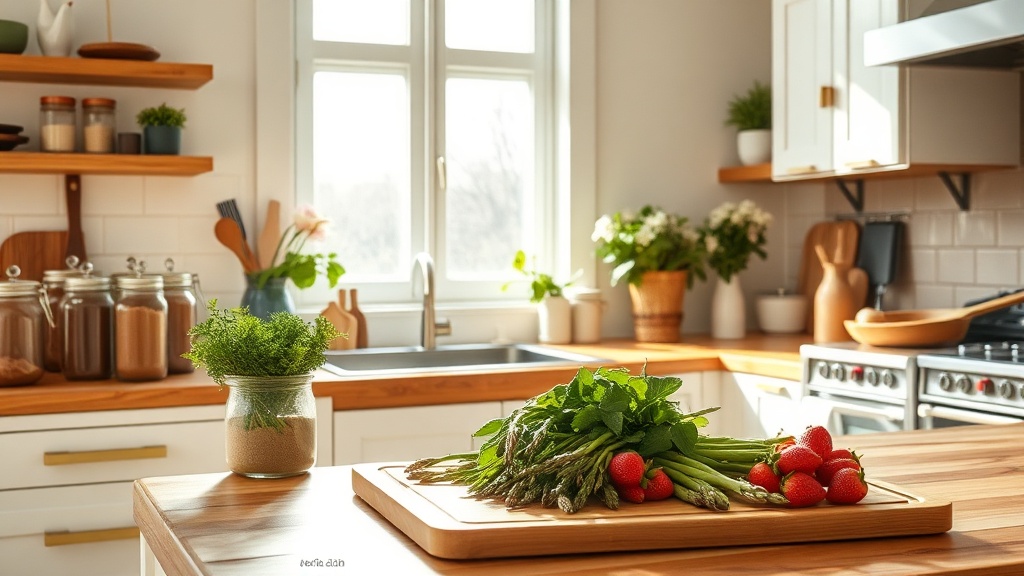
Seasonal vegetables like asparagus, peas, radishes, and strawberries are at their peak flavor and nutritional value. Using them reduces the carbon footprint associated with out‑of‑season imports.
Recipe 1: Asparagus & Lemon Quinoa Bowl
Ingredients: 1 cup quinoa, 2 cups water, 1 bunch asparagus (trimmed), 1 lemon (zest + juice), 2 tbsp olive oil, pinch of sea salt, fresh herbs.
Steps:
- Rinse quinoa, combine with water, and simmer 15 minutes.
- While quinoa cooks, toss asparagus in olive oil, salt, and lemon zest; roast at 400°F for 10‑12 minutes.
- Fluff quinoa, stir in lemon juice, and top with roasted asparagus and chopped herbs.
Recipe 2: Spring Pea & Mint Soup
Ingredients: 2 cups frozen peas, 1 small onion, 2 cups vegetable broth, 1/4 cup fresh mint, 1 tbsp butter, salt & pepper.
Steps:
- Sauté onion in butter until translucent.
- Add peas and broth; simmer 5 minutes.
- Blend until smooth, stir in mint, season, and serve warm.
Recipe 3: Strawberry & Goat Cheese Salad
Ingredients: 2 cups mixed greens, 1 cup sliced strawberries, 1/4 cup crumbled goat cheese, 2 tbsp toasted walnuts, balsamic reduction.
Steps:
- Toss greens with strawberries and walnuts.
- Drizzle balsamic reduction, top with goat cheese, and enjoy.
How do I keep the momentum after the reset?
Adopt a weekly “signal filter” for your kitchen habits. Just as the 3‑Minute Daily Signal Filter helps trim digital noise, a quick 5‑minute nightly sweep—wiping counters, checking food waste, and refilling reusable containers—maintains the low‑impact lifestyle you’ve built.
Takeaway
By swapping out disposable items, embracing plant‑based cleaners, and cooking with spring’s bounty, you’ll reduce waste, cut costs, and nourish your body. Start with one swap this weekend, add a recipe, and let the rest follow naturally. Your kitchen—and the planet—will thank you.