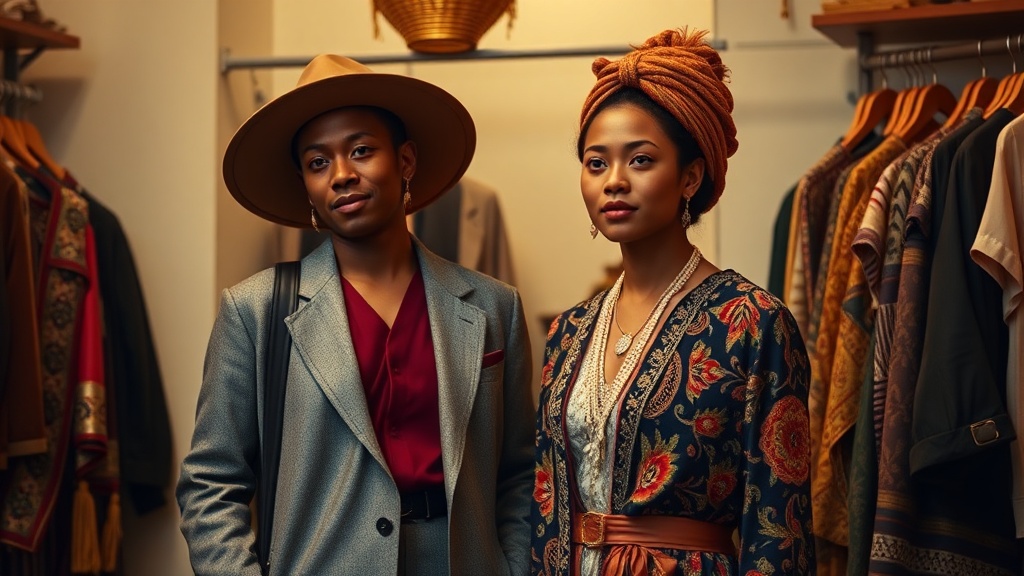
How to Curate a Capsule Wardrobe That Reflects Your Cultural Heritage

This guide breaks down how to build a capsule wardrobe that honors cultural roots without turning into costume. You'll learn to identify heritage pieces worth keeping, source quality items that tell stories, and combine them with modern basics. The goal: getting dressed becomes effortless while your clothing speaks to where you came from.
What Is a Cultural Heritage Capsule Wardrobe?
A cultural heritage capsule wardrobe contains 25-35 versatile pieces where at least 40% directly reference your cultural background through traditional textiles, silhouettes, or craftsmanship. Unlike a standard capsule (neutral basics that blend together), this approach foregrounds identity. The remaining 60% consists of modern foundations that ground those statement pieces in everyday wearability.
Here's the thing: this isn't fast fashion trend-hopping. Fast-fashion brands routinely lift traditional patterns without context—Maori tattoos on socks, Native American headdresses on festival-goers. A heritage capsule requires intention. You're curating pieces made by artisans from your tradition (or ethically sourced reproductions) and learning the stories behind them.
The payoff? Decision fatigue drops. Every item connects to something real. And compliments become conversations about craft, not just consumption.
How Do You Identify Which Heritage Pieces Deserve a Place?
Start with pieces you'd actually wear weekly—not items relegated to "special occasions" that gather dust.
Take inventory. Spread everything you own across your bed. Separate items into three categories: daily drivers, occasional wear, and storage. Now examine the occasional pile. Which pieces spark genuine joy versus obligation? That embroidered blouse from Oaxaca stays. The itchy wool sweater from a distant relative's closet goes.
Worth noting: not everything heritage deserves preservation. Some traditional clothing carries outdated gender norms or uncomfortable fits. Your capsule should work for your body and values—not the other way around.
Research helps. For example, if you're Japanese-American, understanding kimono construction reveals why certain silks drape differently than polyester imitations. If you're Nigerian, knowing the difference between aso-oke and ankara affects which pieces hold up over decades versus seasons.
Three questions to filter by:
- Does this piece connect to a specific memory, region, or family story?
- Can it pair with at least three items already in your closet?
- Is the craftsmanship durable enough for 100+ wears?
Pass all three? It's capsule material. Fail any? Reconsider.
Common Heritage Pieces That Work
Certain traditional items translate seamlessly into modern rotation:
| Heritage Item | Modern Pairing | Care Requirements |
|---|---|---|
| Mexican Rebozo | White button-down, straight jeans | Dry clean only; store flat |
| Scottish Wool Scarf | Navy peacoat, Chelsea boots | Hand wash cold; air dry |
| Indian Block-Print Tunic | Black tailored trousers, loafers | Machine wash gentle; hang dry |
| Peruvian Alpaca Poncho | Dark denim, leather boots | Professional cleaning recommended |
| Ghanian Kente Cloth Accessories | Neutral suit, white sneakers | Spot clean; avoid direct sunlight |
Where Can You Source Authentic Heritage Pieces?
Direct from artisans beats middlemen. Period.
The catch? Finding them requires more legwork than Amazon Prime. Start with organizations that verify provenance. Nest connects consumers with craft workers worldwide, ensuring fair wages and authentic technique. For Native American pieces, the Indian Arts and Crafts Association certifies genuine work—critical given that up to 80% of "Native American jewelry" sold in some tourist markets is actually imported knockoffs.
Travel remains unmatched. That ikat scarf from Uzbekistan costs $12 at a Tashkent bazaar but $180 through a boutique importer. If you're visiting family abroad, allocate luggage space for textiles. Ask relatives where they shop—not tourist markets, but neighborhood stalls where locals actually buy.
For secondhand hunting, specificity wins on eBay and Etsy. Search "vintage [specific technique]" rather than broad ethnic terms. "Vintage mud cloth" yields better results than "African blanket." Check seller location (should match item origin), request close-up photos of weaving or stitching, and ask directly: "Who made this and when?" Silence or vague answers mean pass.
That said, some heritage pieces resist easy acquisition. Korean hanbok requires custom tailoring. Scottish Highland dress needs precise measurements. Budget 4-8 weeks for these pieces—rushing produces ill-fitting results that rarely get worn.
Red Flags When Shopping
- Vague origin stories ("inspired by global cultures")
- Prices too low for handwork (that $15 "hand-embroidered" top involved exploited labor)
- Sacred symbols on secular items (religious iconography as decoration)
- No information about maker or technique
How Do You Balance Heritage Pieces With Modern Basics?
The 60/40 rule keeps heritage capsules wearable.
Heritage pieces command attention. They're often colorful, textured, or structurally distinctive. Pairing them with equally loud modern items creates visual chaos. The solution? Investment-grade basics that recede.
Your foundation pieces should include:
- Two pairs of quality trousers—perhaps the Uniqlo U regular-fit pleated pants (under $60, excellent construction) or secondhand Brooks Brothers wool flannels. One neutral, one dark.
- Three well-fitted tops—white, cream, and one color that complements your heritage palette. Natural fibers only (cotton, silk, linen, wool).
- One structured outer layer—a tailored coat or blazer that bridges traditional silhouettes with contemporary lines. The Everlane Italian ReWool overcoat works well here.
- Footwear that walks—you'll actually wear these pieces if your feet don't hurt. Common Projects Achilles Low or their ethical alternative, Veja V-10s, pair with virtually everything.
These basics cost more upfront. Calculate cost-per-wear: a $200 pair of trousers worn 150 times annually for five years runs $0.27 per wear. A $40 fast-fashion version that pills after eight wears costs $5 per wear. The math favors quality.
Sample Weekly Rotation
Here's how one heritage capsule might play out:
Monday: Block-print tunic (heritage) + black Uniqlo trousers + Veja sneakers
Tuesday: White oxford shirt + vintage rebozo as belt (heritage) + grey wool trousers
Wednesday: Navy cashmere sweater + cream silk skirt (heritage) + leather loafers
Thursday: Indigo-dyed wrap top (heritage) + black trousers + silver jewelry from family
Friday: Grey crewneck + dark denim + embroidered jacket (heritage) + sneakers
Notice the pattern: heritage pieces anchor each day without overwhelming. You're not wearing costume. You're wearing clothes that mean something.
What About Maintenance and Storage?
Heritage textiles often demand specialized care. Ignore this and your capsule shrinks fast.
Natural dyes bleed. Hand-woven fabrics snag. Delicate embroidery unravels in washing machines. Read care labels—if there aren't any, research the specific technique. Museums publish textile care guidelines; the Smithsonian's Museum Conservation Institute offers free resources on preserving traditional fabrics.
Storage matters too. Cedar blocks deter moths better than chemical mothballs (which can yellow fabric). Acid-free tissue paper prevents creases in folded items. And direct sunlight fades natural dyes faster than synthetics—position heritage pieces away from windows.
Some items benefit from professional attention. Find a dry cleaner who handles vintage and couture pieces, not just standard business shirts. Ask if they've worked with your specific textile types before handing over a family heirloom.
Can You Mix Heritage From Multiple Cultures?
Absolutely—if you understand what you're combining.
Multicultural heritage requires deeper homework. A person with both Japanese and Mexican ancestry wearing indigo-dyed pieces from both traditions creates a coherent personal aesthetic. Random mixing without understanding reads as appropriation—even of your own background.
The test: can you explain the significance of each piece if asked? Not a dissertation, but basic context. Where it's from. Who made it. What the patterns represent. If you can't answer, spend more time learning before wearing.
Second and third-generation immigrants often face pressure to perform identity perfectly. Your heritage capsule doesn't require purity. It requires respect. One authentic piece worn with knowledge outweighs a closet full of symbols worn without understanding.
"Clothing is the first message we send before speaking. Make yours intentional." — this applies doubly to heritage pieces. They speak of history, labor, and identity. That's weight worth carrying.
Building a cultural heritage capsule takes time. Months, sometimes years. Start with one piece that genuinely resonates. Learn its story. Wear it regularly. Add slowly. The result isn't just a functional wardrobe—it's a daily practice of remembering where you came from while dressing for where you're going.
Steps
- 1
Audit Your Current Closet and Identify Heritage Pieces
- 2
Research Traditional Textiles and Silhouettes From Your Culture
- 3
Select Versatile Base Pieces in Neutral, Culture-Inspired Colors