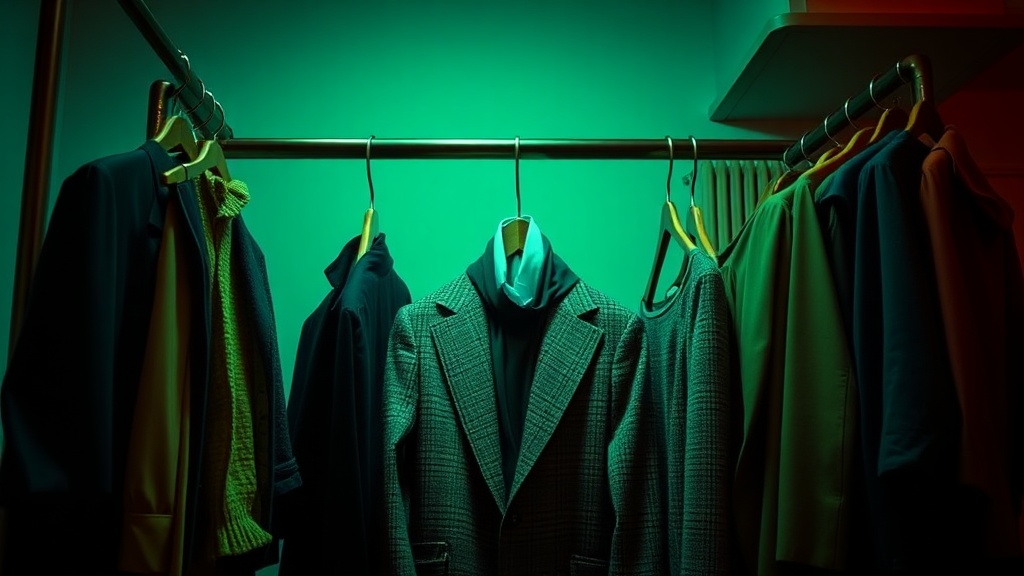
How to Build a Capsule Wardrobe That Truly Reflects Your Identity

This guide breaks down exactly how to build a capsule wardrobe that doesn't just save closet space but actually mirrors who you are at your core. You'll learn the specific number of pieces that work for real adult life, which fabrics and ethical brands hold up over time, and the step-by-step method for curating clothes that feel like a natural extension of your personality rather than a costume you're forced to wear. If you're tired of staring at a bursting closet with absolutely nothing to wear, this is the antidote—and it starts with treating your wardrobe as an edited collection, not a warehouse.
What Is a Capsule Wardrobe and Why Does Identity Matter?
A capsule wardrobe is a tightly edited collection of versatile, high-quality clothing items that you genuinely love to wear, typically built around a cohesive color palette and your actual lifestyle rather than a fantasy one. The catch? Most online guides treat it like a rigid math problem—thirty-seven items, end of story—while completely ignoring the fact that clothes are one of the most immediate forms of self-expression available to us. (You aren't a mannequin in a window display.)
When your wardrobe aligns with your identity, getting dressed becomes almost automatic. You stop performing different versions of yourself for different audiences and start presenting something closer to the real thing. That said, identity isn't static. It shifts with your career trajectory, your geography, your evolving values, and even your relationship status. A twenty-five-year-old corporate lawyer in Toronto needs a radically different capsule than a remote illustrator splitting time between Lisbon and Mexico City. The goal here isn't minimalism for its own sake; it's intentionality, clarity, and respect for your own time.
"The best wardrobes are autobiographies." — Anuschka Rees, The Curated Closet
Research in fashion psychology supports this approach. A widely cited 2012 article from Psychology Today explored how clothing choices significantly affect both self-perception and external judgment—a phenomenon known as "enclothed cognition." Wearing pieces that feel authentically you doesn't just boost confidence in meetings or first dates; it measurably reduces decision fatigue during chaotic mornings. That's the real, everyday payoff.
How Many Pieces Should a Personal Capsule Wardrobe Actually Include?
Most seasoned minimalists land somewhere between twenty-five and forty items, a range that includes shoes and outerwear but excludes underwear, dedicated workout gear, pajamas, and formal occasion wear. Here's the thing: the exact number on the spreadsheet matters far less than the ratio of pieces you actively wear versus pieces that simply hang there gathering dust and inducing guilt.
Start with thirty-three. It's specific enough to force real decisions but flexible enough to accommodate seasonal shifts and weather surprises. The original Project 333 challenge—thirty-three items for three months—proved empirically that most people need far less clothing than they assume. You can always adjust down to a lean twenty-five if you live in a climate-stable area like Southern California, or up to forty if your job requires formal business attire five days a week and frequent client dinners.
Worth noting: accessories count if you wear them daily without thinking. A signature watch, your prescription glasses, or a wedding ring that never leaves your body? Include them in the count. That beaded necklace from a trip to Mexico that you wear exactly twice a year? Leave it out. The point is ruthless honesty about what actually gets used in your real life, not what you wish you wore more often.
| Season | Recommended Piece Count | Best For |
|---|---|---|
| Spring / Fall | 33 items | Transitional weather, layering needs |
| Summer | 25–30 items | Lighter fabrics, fewer layering pieces |
| Winter | 35–40 items | Heavy coats, boots, knitwear required |
| Year-Round (stable climate) | 25 items | Minimal seasonal fluctuation |
Which Brands and Fabrics Best Support an Authentic Wardrobe?
Natural fibers age better, breathe easier, and tend to look far more expensive than they actually are. Cotton, linen, wool, and silk should form the backbone of any serious capsule. That said, a small percentage of technical fabric—maybe ten percent of the total—can be a smart move for travel, activewear, or outerwear. The Patagonia Nano Puff jacket is a staple for a reason: it compresses to nothing, works comfortably across three seasons, and lasts for the better part of a decade.
For everyday basics, Uniqlo's Supima cotton crewneck tees hold their shape after dozens of washes and cost under twenty dollars apiece. If you're building a professional workwear capsule, Everlane's Grade-A cashmere sweaters and Cuyana's structured leather totes offer longevity without ostentation. On the footwear front, a pair of Veja V-10 sneakers and classic Dr. Martens 1461 oxfords will cover almost every casual-to-smart occasion without looking try-hard.
Don't sleep on the secondhand market. A perfectly worn-in vintage Levi's 501 trucker jacket or a pre-owned Eileen Fisher silk blouse from The RealReal carries more character than anything fresh off a fast-fashion rack. Plus, buying used sidesteps the staggering environmental toll of new production. The fashion industry accounts for roughly 8–10% of global carbon emissions, according to the United Nations Environment Programme. Curating a capsule wardrobe from quality sources—whether new or used—is one of the most effective ways to opt out of that destructive cycle without sacrificing an ounce of personal style.
How Do You Curate a Capsule Wardrobe Step by Step?
The entire process takes one focused weekend, not a scattered month of half-finished Pinterest boards. Here's the exact method that works.
Step 1: Audit Everything You Own
Pull every single item out of your closet, dresser, and storage bins. Pile it all on the bed. (Yes, everything.) If you haven't worn it in the last twelve months and it doesn't hold deep, irreplaceable sentimental value, it goes straight into the donate or sell pile. Be brutal. Sentimental value means your grandmother's actual wedding dress, not a concert tee from 2019 that you keep "just in case."
Step 2: Define Your Three Style Words
Choose three adjectives that describe how you want to look and feel on a daily basis. Examples: polished, relaxed, artistic; or sharp, minimal, rugged; or romantic, modern, effortless. Every single piece that survives the purge must fit at least two of those three words. If a blazer is "sharp" but not "minimal" or "rugged," it doesn't make the cut—no matter how much you spent on it.
Step 3: Build Around a Unified Palette
Pick a base of four neutral colors—think navy, charcoal, cream, and camel—then add two accent colors that genuinely suit your complexion and current mood. Patterns are absolutely allowed, but they should be small-scale, such as pinstripes, micro-florals, or subtle checks, so they mix easily with solids. Large, loud prints fight with everything else and make getting dressed exponentially harder.
Step 4: Map Pieces to Your Real Weekly Schedule
Count how many days you spend in each major setting: office, home, gym, social events, travel. Your wardrobe should mirror those percentages as closely as possible. If you work from home four days a week, four pairs of stiff dress trousers are a waste of precious space. Replace two with well-cut loungewear sets from Lunya or a heavyweight merino wool sweater that looks effortlessly presentable on a Zoom camera.
Step 5: Create a "One In, One Out" Rule
Once your capsule is set, don't let it bloat back into chaos. If you buy a new winter coat, an old coat must leave. This isn't about deprivation—it's about maintenance. Capsules fail most often when they become static museums instead of living, breathing systems that evolve with you.
What Are the Most Common Capsule Wardrobe Mistakes?
The single biggest error? Buying for a fantasy version of your life instead of the one you actually live. The catch? That backless silk slip dress looks beautiful in theory, but if you haven't attended a cocktail party since 2019, it's just expensive closet decoration taking up real estate.
Another frequent mistake is copying Pinterest aesthetic boards wholesale. Those beige-on-beige-on-beige minimalism grids look cohesive as screenshots, but they erase individuality entirely. If you love bold color, build a colorful capsule. If you hate heels with a burning passion, don't force in a pair of stilettos "just in case." The wardrobe should serve your actual body and preferences, not an algorithm's idea of what looks good.
People also chronically underestimate the power of tailoring. A seventy-five-dollar blazer that fits your shoulders and waist perfectly will always look better than a five-hundred-dollar designer blazer that pools at the wrists or gaps at the back. Find a local tailor—many dry cleaners offer surprisingly competent basic alterations—and budget for adjustments. Hemming trousers, shortening sleeves, or taking in a waistband transforms off-the-rack into something that looks custom-made.
Finally, don't rush the emotional purge. If you're not psychologically ready to part with a particular item, box it up and store it in the attic or under the bed. Revisit it in six months. If you never once thought about wearing it during that time, donate it without a second glance. Guilt isn't a good reason to keep clothes. Neither is the sunk-cost fallacy.
Building a capsule wardrobe that reflects your identity isn't about chasing micro-trends or achieving some Instagram-perfect minimalism that looks sterile and cold. It's about owning fewer, better things that tell the truth about who you are and where you're headed. Start with the full closet audit this weekend. Remove the fantasy pieces. Keep the ones that feel like you. By Monday morning, getting dressed might actually feel like a small pleasure—not another project on an already crowded to-do list.
Steps
- 1
Audit Your Current Wardrobe and Define Your Lifestyle Needs
- 2
Choose a Cohesive Color Palette and Signature Pieces
- 3
Curate, Edit, and Organize Your Final Capsule Collection