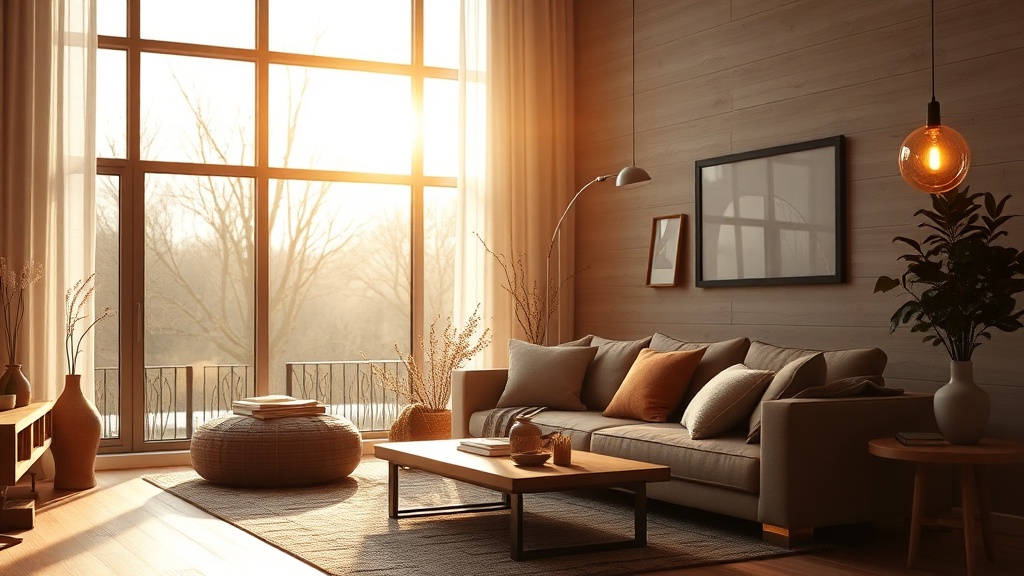
Daylight Saving Adjustment: Refresh Your Home Lighting to Boost Mood and Energy

Daylight Saving Adjustment: Refresh Your Home Lighting to Boost Mood and Energy
Hook:
Ever notice how the first week after the clocks spring forward feels like you’re walking through a dimly lit hallway? Your home lighting might be the silent culprit stealing your mood and energy.
Context:
Daylight Saving Time (DST) isn’t just a bureaucratic time‑shuffle; it’s a physiological jolt. When the sun rises earlier, our circadian system gets a surprise upgrade — or a crash if the indoor environment stays stuck in winter mode. I treat your time as a non‑renewable resource, so let’s cut the guesswork and re‑engineer the light in your home.
What Is the Ideal Light Temperature for Spring?
Answer: Aim for a cool‑white (4,000‑5,000 K) during daytime activities and a warm‑white (2,700‑3,000 K) after sunset.
Why? Research from the Harvard Medical School shows that cool‑white light suppresses melatonin, keeping you alert, while warm‑white cues relaxation and prepares the body for sleep. Swap your old 2,700 K bulbs for a 5,000 K LED in work zones, and keep the warm ambiance in the living room after 8 PM.
Internal link: I covered the science behind light‑therapy in my earlier post, DST 2026: Neurosurgeon‑Backed Sleep Hacks for Longevity.
How Can I Layer Light for Maximum Mood Boost?
Answer: Use three layers — ambient, task, and accent — and let each layer answer a specific need.
- Ambient — the base layer that fills the room. Ceiling‑mounted smart LEDs let you program sunrise‑simulating ramps that gradually brighten at 6 AM.
- Task — focused light for reading, cooking, or working. Desk lamps with adjustable color temperature let you dial in the 4,500 K sweet spot.
- Accent — mood‑setting pieces like LED strips behind a TV or a floor lamp with a dimmer. Use warm tones in the evening to cue winding down.
Pro tip: Pair smart bulbs with a Google Home routine that syncs the lights to your calendar’s DST change. The automation takes seconds, but the mental bandwidth savings are priceless.
Which Smart Controls Should I Use to Align With Natural Light Cycles?
Answer: Choose a platform that integrates with your phone’s calendar and supports geofencing.
| Platform | Calendar Integration | Geofencing | Voice Assistant |
|---|---|---|---|
| Philips Hue | ✅ (iOS/Google) | ✅ | Alexa, Google, Siri |
| LIFX | ✅ (iOS) | ✅ | Alexa, Google |
| Nanoleaf | ✅ (Google) | ❌ | Alexa, Google |
If you already have a Nest thermostat, the Hue bridge talks to it natively, letting you create a “Daylight Sync” scene that dims the lights as the sun sets — a seamless way to keep your circadian rhythm on point.
What Are the Most Energy‑Efficient Bulbs That Still Deliver Quality Light?
Answer: Look for LEDs with a CRI (Color Rendering Index) of 80+ and an Energy Star label. The Cree 60W Equivalent and Sylvania Ultra models cost under $10 per bulb and last up to 25,000 hours.
Fact check: According to the U.S. Department of Energy, LED bulbs use 75 % less energy than incandescent and emit up to 30 % less heat, which also helps keep your home’s temperature stable during the longer daylight hours.
How Do I Audit My Current Lighting Setup in 5 Minutes?
Answer: Walk through each room with a smartphone light‑meter app (e.g., Lux Light Meter). Record the lumens and Kelvin reading for each fixture. Anything below 300 lux in work zones or above 2,700 K after sunset needs an upgrade.
Quick checklist:
- Living room: Is the ambient light warm after 8 PM?
- Home office: Does the task light hit 500 lux at your desk?
- Bedroom: Are you still using a night‑stand lamp at 2,700 K?
Takeaway: Light Is the Quiet Power‑Tool You’ve Been Ignoring
The DST shift is a perfect reminder that our built environment still runs on outdated lighting habits. By swapping to cool‑white LEDs for daytime, layering ambient‑task‑accent light, and automating with smart controls, you’ll align your home with the longer spring days, boost mood, and protect your sleep.
Next step: Grab a cheap lux‑meter app, audit one room, and replace any mismatched bulbs before the first weekend of March. Your brain will thank you, and your calendar will stay clear for the things that truly matter.
Related Reading
- The 3‑Minute Daily Signal Filter: A Quick‑Hit Guide to Cutting Noise — how I strip away information overload, the same principle I apply to lighting.
- Quiet Tech 2026: 5 Devices That Let You Focus — tools that pair well with a well‑lit workspace.
- Bio‑Harmony 2026: How to Sync Your Life with Your Body’s Clock — deeper dive into circadian rhythm beyond light.
Featured Image Alt Text: "Modern living room bathed in natural daylight, smart LED bulbs glowing softly, early‑spring ambience"