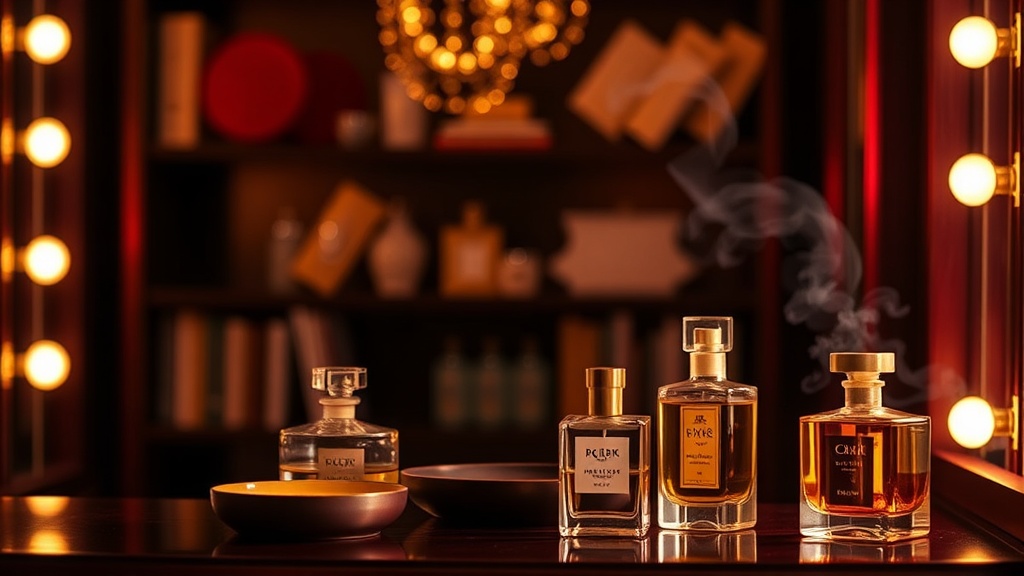
Curating a Signature Scent: A Guide to Building Your Personal Fragrance Wardrobe

Have you ever walked into a room and felt that a specific scent—not a perfume, but an aura—immediately identified your presence before you even spoke?
Fragrance is the most underrated tool in a sophisticated toolkit. It is an invisible layer of identity that operates on a subconscious level, influencing how others perceive your authority, warmth, or creativity. However, most people approach scent through the lens of impulse: they buy what is trending on social media or what a salesperson at a major department store suggests. This leads to a cluttered vanity of half-used bottles that don't actually represent who you are.
Building a signature fragrance wardrobe is not about collecting many bottles; it is about strategic curation. It requires understanding the architecture of a scent, the chemistry of your skin, and the seasonal shifts in your environment. This guide provides a systematic framework for moving from a consumer of trends to a curator of your own olfactory identity.
The Fundamentals: Understanding Fragrance Architecture
To select a scent with precision, you must first understand how it evolves over time. A fragrance is not a static smell; it is a chronological progression of chemical compounds. If you judge a perfume based solely on the first spray, you are making a fundamental error in judgment.
- The Top Notes (The Hook): These are the volatile molecules that hit your nose immediately upon application. They are bright, sharp, and fleeting, often consisting of citrus (Bergamot, Lemon) or light herbs. Expect these to last only 5 to 15 minutes.
- The Heart Notes (The Personality): Also known as middle notes, these emerge once the top notes dissipate. This is the true character of the scent—often floral (Jasmine, Rose), spicy (Cardamom, Cinnamon), or fruity. They form the core of the fragrance for several hours.
- The Base Notes (The Foundation): These are the heavy, slow-evaporating molecules that linger on your skin and clothes. Think woods (Sandalwood, Cedar), resins (Amber, Benzoin), or musks. This is what people will actually smell on you hours after application.
When testing a new scent, do not settle for the "dry down" (the base notes) being a mystery. You must experience the transition from the top to the base to ensure the scent remains cohesive throughout its lifespan.
The Three-Tiered Wardrobe Strategy
A functional fragrance wardrobe should be structured like a capsule wardrobe. Instead of buying dozens of disparate scents, aim for three distinct categories that cover your life's various requirements. This prevents the "scent fatigue" that occurs when you wear the same heavy oud to a bright morning meeting.
1. The Daily Driver (The Professional Signature)
This is your reliable, high-frequency scent. It should be sophisticated but unobtrusive. In a professional setting—whether you are in a high-rise in London or a creative studio in Brooklyn—you want a scent that signals competence without being a distraction. Look for "clean" profiles: vetiver, iris, or light cedarwood. Examples of this archetype include Prada L'Homme or Molecule 01 by Escentric, which rely on subtle, skin-like textures rather than aggressive projection.
2. The Statement Piece (The Evening/Formal Scent)
This is your high-impact fragrance reserved for evening events, galas, or significant social engagements. This is where you can explore heavier, more complex notes like oud, leather, tuberose, or dark vanilla. A statement piece is designed to project. If you are attending an outdoor gala, you might opt for something more robust like Tom Ford Black Orchid or Byredo Mojave Ghost to ensure the scent isn't lost to the breeze.
3. The Weekend/Leisure Scent (The Casual Essential)
This is the scent for your downtime—brunch, weekend travel, or lounging at home. It should feel effortless and relaxed. Think solar notes, sea salt, neroli, or light tea accords. It is the olfactory equivalent of a linen shirt. A scent like Jo Malone London Wood Sage & Sea Salt fits perfectly here, providing a sense of calm and natural freshness.
The Science of Application and Longevity
The biggest mistake in fragrance application is the "spray and pray" method. To maximize the value of your investment, you must apply with intention. Your skin chemistry—specifically your pH levels and oil content—will drastically alter how a scent behaves.
Pulse Points: Apply fragrance to areas where the blood vessels are closest to the skin, generating heat that helps diffuse the scent. The wrists, the sides of the neck, and behind the ears are standard. However, if you want a more subtle "scent trail" (sillage), apply to the nape of your neck or even the back of your knees.
Avoid the Rub: Never rub your wrists together after applying. This creates friction-induced heat that breaks down the delicate top notes prematurely, effectively "crushing" the scent profile and altering the intended evolution. Let it air dry naturally.
Moisture is Key: Fragrance evaporates much faster on dry skin. If you find that high-quality perfumes disappear on you within an hour, apply an unscented moisturizer or a thin layer of petroleum jelly to your pulse points before spraying. This provides a "grip" for the fragrance molecules.
Navigating the Market: Avoiding the Hype Cycle
The fragrance industry is currently dominated by "beast mode" marketing—scents designed to be overwhelmingly loud and long-lasting to satisfy social media reviewers. While longevity is desirable, volume is not a proxy for quality. A scent that fills a room can quickly become an annoyance rather than a signature.
When shopping, differentiate between Eau de Toilette (EDT) and Eau de Parfum (EDP). An EDT typically has a lower concentration of perfume oils (5-15%) and is lighter and more volatile. An EDP (15-20%) is more concentrated and will generally last longer on the skin. If you want a scent that lingers through a long workday, look for the EDP or even an Extrait de Parfum, which contains the highest concentration of oils.
To avoid the trap of "blind buying"—purchasing a full bottle based on a single note or a review—use the following protocol:
- The Sample Phase: Purchase 2ml decants from reputable sites like LuckyScent or ScentSplit.
- The 24-Hour Test: Wear the sample in your natural environment. Does it hold up under stress? Does it become cloying in the heat?
- The Context Test: Wear it during a specific activity (e.g., a long flight or a formal dinner) to see how it interacts with different environments.
Curating a signature scent is a discipline of refinement. It is about moving away from the noise of the mass market and toward a personal, curated collection that serves your lifestyle. When done correctly, your fragrance becomes a silent, powerful extension of your presence.
Steps
- 1
Identify Your Core Scent Families
- 2
Test on Skin, Not Just Paper
- 3
Learn the Art of Scent Layering
- 4
Store Your Bottles Correctly