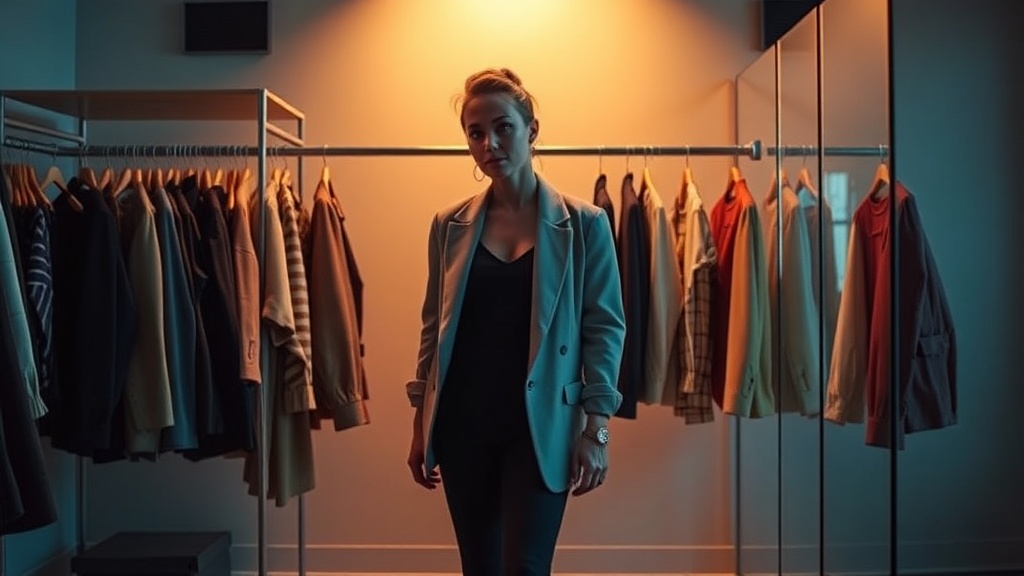
Beyond the Aesthetic: Building a Wardrobe That Actually Works

Most people believe that building a high-quality wardrobe requires a massive budget or a constant influx of new pieces. They think the goal is to accumulate a collection of "investment pieces" that look good in a still photo. This is a fundamental misunderstanding. A real wardrobe isn't a collection of clothes; it's a functional system designed to reduce decision fatigue and reflect your actual life, not a curated version of it. We're talking about moving away from the dopamine hit of a new purchase and toward the long-term utility of a cohesive rotation.
The internet wants you to believe that style is about novelty. It's not. True style is about the relationship between what you wear and how you move through your day. If your clothes only work in a specific lighting or a specific social setting, they aren't part of a functional wardrobe—they're costumes. This guide focuses on the structural side of dressing: the logic of selection, the reality of fabric, and the rejection of the trend cycle.
Why does my closet feel full yet I have nothing to wear?
This is the most common symptom of a fractured wardrobe system. It happens because your purchases are disconnected. You buy a "statement piece" that requires three other specific items to work, but you don't own those items. You buy a shirt that looks great on a model but clashes with the five pairs of trousers you already own. You aren't lacking clothes; you're lacking cohesion.
To fix this, stop looking at individual items and start looking at ratios. A functional wardrobe operates on a predictable math. If you buy a jacket, you should already own at least two tops that work with it. If you buy a skirt, you need the right footwear to ground it. Without this connective tissue, your closet becomes a graveyard of single-use items. Look at your current collection. If you can't mentally pair an item with three other things you own, leave it at the store.
How do I identify high-quality fabrics without a label?
The truth is, a silk label doesn't always mean high quality, and a polyester label doesn't always mean it's junk. You have to look at the construction and the fiber density. A common mistake is prioritizing the brand name over the actual material composition. High-quality clothing should be able to withstand repeated wear and laundering without losing its shape. This is where the "hand feel" comes in—but don't rely solely on your fingers.
Check the seams. Are they straight and tight? Is there fraying at the edges? A well-made garment uses more than just the minimum amount of fabric to save on costs. Look at the weight of the cloth. A heavy-weight cotton T-shirt will hold its shape much longer than a thin, flimsy one, regardless of the price point. For more technical details on garment construction and textile standards, the Business of Fashion provides excellent deep dives into how the industry actually operates behind the scenes.
| Fabric Type | Pros | Cons |
|---|---|---|
| Wool | Temperature regulating, durable | Can be itchy, requires special care |
| Linen | Breathable, gets better with age | Wrinkles easily, less structure |
| Silk | Luxurious drape, temperature control | Delicate, high maintenance |
| Cotton | Versatile, easy to wash | Can lose shape, prone to shrinking |
Can I build a capsule wardrobe on a budget?
The term "capsule wardrobe" has been hijacked by influencers to sell you more stuff. In reality, a capsule is a constraint. It's a way to limit your choices to only what serves you. You don't need to buy a hundred new items to start. You need to audit what you already have. This is the most cost-effective way to build a style—by realizing that your current clothes are likely more versatile than you give them credit for.
Start by identifying your "uniform." What is the outfit you reach for when you don't want to think? Is it high-waisted denim and a structured blazer? Or a midi dress and leather boots? Once you identify that pattern, you can buy pieces that fit that specific logic. This prevents the "impulse buy" trap. If a piece doesn't fit your established uniform, it doesn't belong in your life.
A great resource for understanding the environmental and economic impact of clothing consumption is the Good On You directory, which helps you vet brands based on actual practices rather than marketing claims. Investing in fewer, better things is a financial decision as much as a stylistic one. It reduces the long-term cost of ownership.
The Rule of Three: A Practical Application
Before you checkout, ask yourself: Can I wear this in three different ways with things I already own? If the answer is no, the item is a liability, not an asset. This simple mental check acts as a filter for your impulses. It forces you to view the garment as part of a system rather than an isolated object. This is how you move from being a consumer of trends to a curator of a personal identity.
Style isn't a performance for an audience; it's a tool for your own confidence. When your clothes work for you, you stop worrying about how you look and start focusing on what you're actually doing. That is the ultimate goal of a well-built wardrobe. It should disappear into the background of your life, leaving you free to exist without constant adjustment.